Showing posts with label Sabah. Show all posts

Wednesday, May 12, 2010

Mari Mari Cultural Village,Kota Kinabalu,Sabah

Leaping high - very skilful


'Mari- Mari' means ' come, come' in Malay and what a welcome it was to the Mari - Mari Cultural Village. Before departing for Kinabalu National Park, we did not want to miss this visit so we shared half day at Manukan Island and the other to experience the culture of some the tribes of Sabah.

The cultural village is situated in a remote forest about 30 minutes from Kota Kinabalu city. Be prepared to indulge in tribal customs, rituals and ways of life .

Verdict - insightful and a very hands-on visit with a wonderful guide to make our day. That day, there were only 4 of us - 2 Americans and 2 Malaysians ready to soak up old and gone traditional living of the tribes.

It was absolutely engrossing to see, smell, touch and do as we moved among the 5 longhouses of the tribes - Rungus, Dusun, Lundayeh, Bajau and the Murut. The bark of trees, the bamboo, the wooden utensils, the thatched roofs - nature in existence then and now, all meld to give us stories of each longhouse of the tribes. Very fascinating! Life 'As It was... As It Is' says the brochure lived up to its description.

Our adventure began with the high priestess, known as 'Bobohizan' appearing from the jungle and blessing the visitors with charmed water to ward off evil spirits that might intrude the village.


A green crocodile to show a head warrior lives in the longhouse.

Just lift the roof - let the breeze in and you are cooled ! Modernity takes a back seat here!

A Rungus lady prettily dressed in her costume (note the beadwork )

Happy feet doing the bamboo dance at the dance hall. It was fun and energetic. The Murut bamboo dance, the Magunatip gets your adrenaline pumping as the tempo quickens. The Sabah tribes make very good use of the abundant bamboo. Rhythmic stomping noises of the bamboo was music to our ears.


Tatoo designs as souvenirs. All 4 of us had our turns to have the henna decorations on our arms.

Getting ready for the leap from the trampoline. The other participants rhythmically move and shake the platform - the big trampoline made from bamboo. It looks simple but timing and skill are crucial to make the big leap and touch the ' prize' above.


The tobacco is rolled and now comes the smoking - for peace! It was strong. Didn't the men splutter trying it!!

Aim - blow! with a blowpipe. The young boy aced on his target, needless to say. We had more misses than hits! The blowpipe is made from bamboo. The poison (for real use) is a lethal prepared sap from the Ipoh tree (antiaris toxicaria)
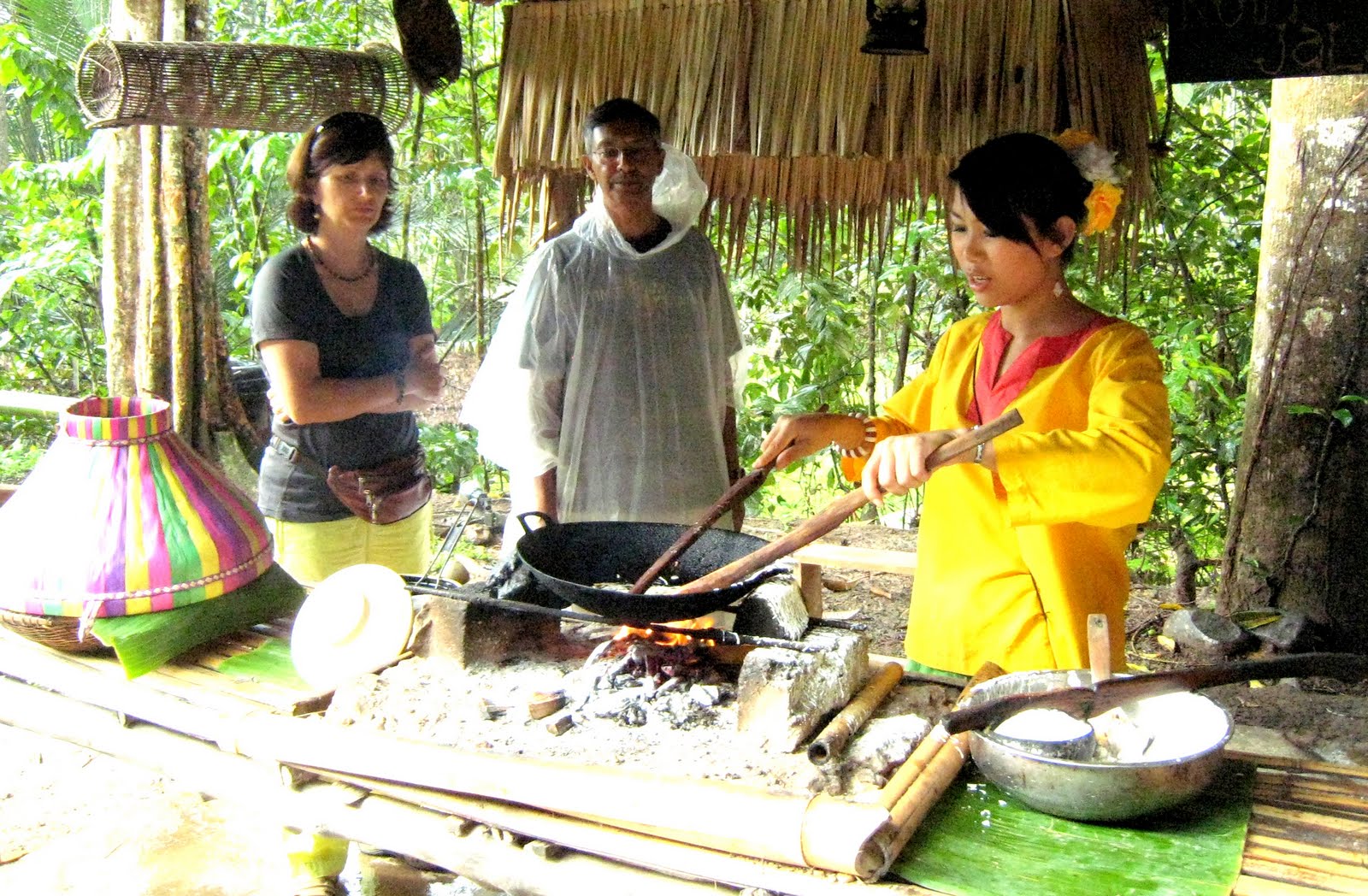

We tasted the roti jala made the Sabahan way. Again, there's always bamboo used in some form or other in the daily lives of the Sabahans. We even prepared our own food of meat and herbs which we ate at the end of the entire tour.


Musical ingenuity with different sizes of the bamboo.

Painstaking method of making yarn

No matches to start a fire.
After the demo, it was our turn . Gosh, it was more than hard work ! Can you see the taut hands and face which got redder and redder and there was no fire - yet!!


Our guide holding up a vest - all made from the bark of trees. Real priceless piece of clothing.


The areca nut being shaved and then eaten with lime on a betel nut leaf. Want a 'high'? - this can give you some!
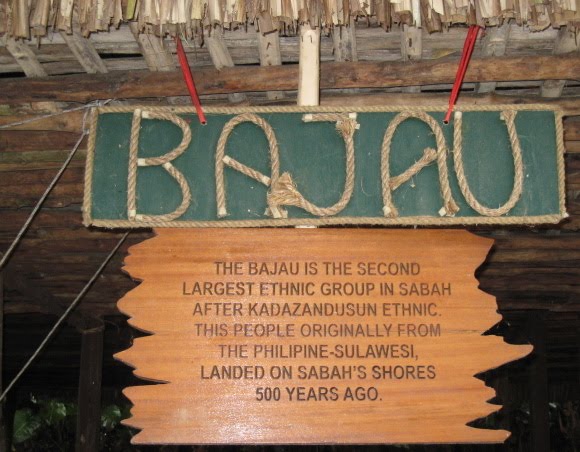

Also known as the sea gypsies of Sabah


A pretty Lundayeh lass


A group photo after the wonderful dances. A truly memorable visit to Sabah, 'The Land Below The Wind'.

Friday, May 7, 2010

Raffelsia Blooming!


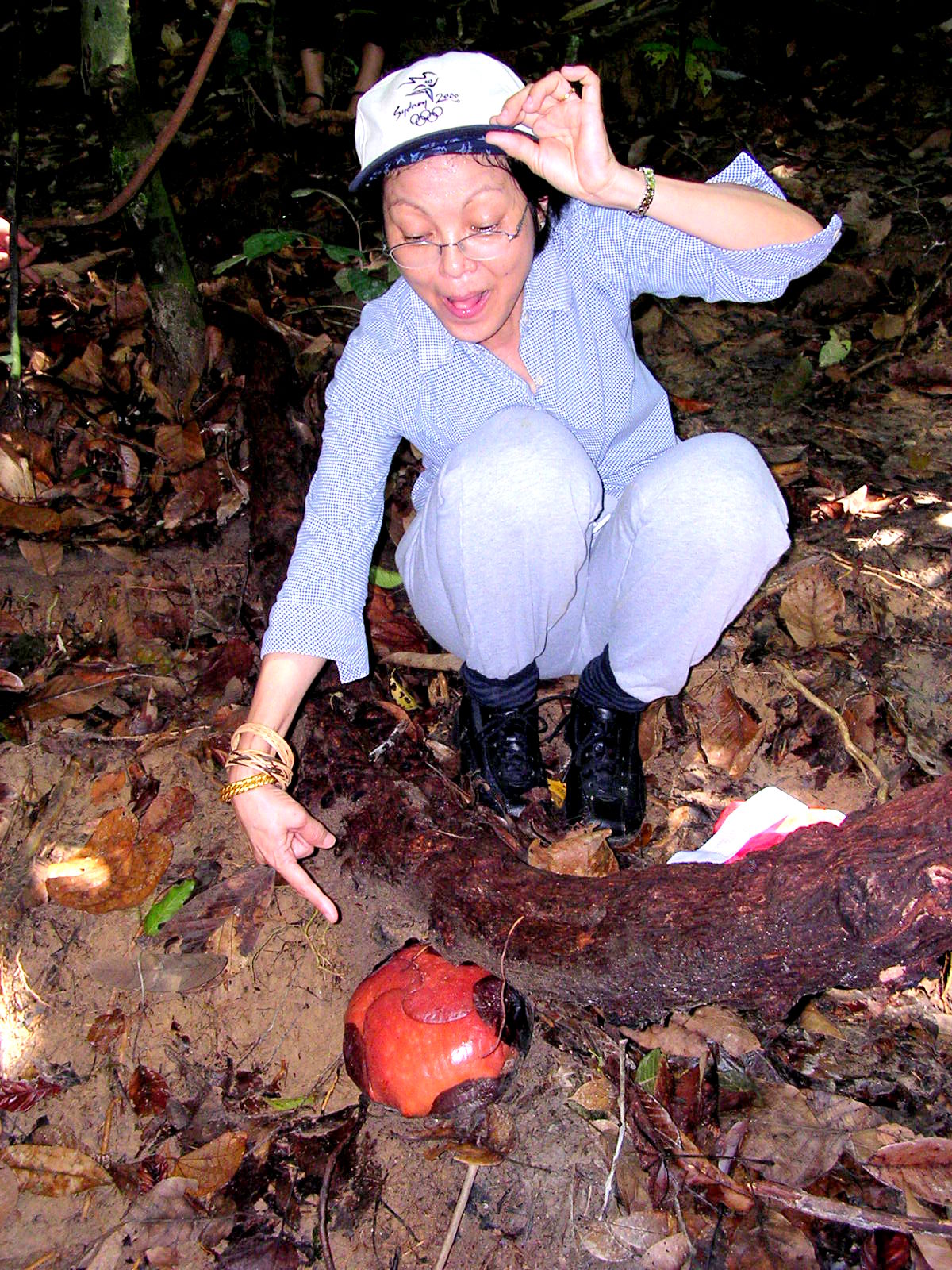
YAY! At last, I saw the raffelsia in bloom! Did I hear someone shout 'Stinko beauty!'?? That's the reputation the raffelsia has got itself for the rotting flesh attracts insects and flies and carnivorous beetles.

I last saw the rafflesia as a golden -orangey 'cabbage' in the Belum Temenggor reserve in 2006. It was like striking gold! Alas, it wasn't ready to open up. There was to be a waiting period of about 3 days . The guide told us to come back.

Rich ball of gold! - in Royal Belum Temenggor reserve


Worth all the trudging and climbing in the jungle


This time round, at Kobob, Raffelsia Conservation Garden, Ranau, the taxi man, our guide saw a banner announcing Rafflesia in Bloom. It's like announcing a birth - except this is rarer! With no specific flowering season, news like this certainly causes a stir among people hunting for the rafflesia.

So, we descended on the rafflesia. I was already excited . A flower so rare, with only 5-6 days in bloom. Then, it turns black , its glory short-lived.

A lady came out from the house and we signed in the visitors' book and paid a fee to view and take some photos.


Down a path the lady guided us. Then we walked on a hastily constructed plankwalk. There had been a landslip and huge bamboos crashed around 2 raffelsias in bloom. There! She pointed to the rafflesia keithii- sitting safe in the plot of land. Gotcha baby! This is REAL ! - after all the countless images in the media. It was already the 3rd day and already signs of fading life were visible. The petals were slightly curled at the edges and the colour had changed, the lady pointed to our attention. Flies were flying around. But I didn't get a whiff of the rotting smell - ? too early or having to stand a distance away. 'You're lucky to see TWO in bloom close to one another,' the lady hastily added.

The other rafflesia was even further away from our eye view. Luckily it escaped the loose , crumbly earth and the clumps of bamboo that threatened to crash on it. 2 of the 5 petals were not open away from the centre disc as the land disturbance had caused them to flap inwards.


A view from afar is better than none!


On a tetrastigma vine, we saw a bud. It was only about 2 months old? How curious - no stem, no leaves, no roots - the parasitic rafflesia grows on the host vine . It starts life as a dark brown bud and finally , the crowning glory of a 5 petalled flower develops. If you think waiting for a human baby to develop in its mother's womb is long. Think again. The rafflesia from bud to bloom takes 12 months! It weighs a hefty 9 kilo!


To the untrained eye, it could be anything! - a precious little rafflesia in bud.


Raffelsia keithii was dicovered by Henry George Keith, former conservator of forests, North Borneo. It is endemic to Sabah and is proudly recognised as the state flower. Rafflesia was first named after Sir Thomas Stamford Raffles, founder of Singapore Island. The latter led an expedition in Indonesia and chanced upon it with his naturalist friend, Dr Joseph Arnold in 1818. So it came to be, the genus is named rafflesia and the specie , arnoldii. And there are 18 species in this part of the world which includes Borneo, Sumatra, Philippines, Thailand and West Malaysia.

Definitely seeing 2 rafflesias in bloom was one of the highlights of my Sabah visit. Hope you will have as much or more luck than me . One thing is for sure - the natural habitat has to remain for us to glorify the rafflesias.


More visitors viewing the rafflesia from the plankwalk.

Monday, May 3, 2010

Canopy walkway, Kipungit Fall, Hotspring - Poring, Sabah


Canopy Walk, Poring, Kinabalu National Park

It was roughly a 20 minute walk uphill to the canopy walk at Poring Hotspring Park. What a thrill! To be up there and not have my feet on solid ground! To be exact, 30.8 metre above the ground and a stretch of 105 metre 'skywalk' with 5 platforms to linger by and marvel nature. The tualang ( Koompassia excelsa) trees majestically tower above, at 85.7 m just took our breath away.


You can't but be in awe of the rainforests. There was a' gentle ' reminder for visitors to take home lasting beautiful memories and not to defile anything in the forest in any way.

Away from the din of city life, the jungle offers its own kind of noises. A male cicada making its mating calls is unashamedly noisy. I don't know how many were calling. But should you have been there, the cicadas were at their symphonic best! So LOUD and the jungle just resonated with their music. I love it! It was not easy to see them. Caught sight of 2 on the tree trunks.


Lianas here, there and everywhere! What a thick loop! Trudging the trail one has to look where you step. Don't forget to pause, look around and skyward too.


The starting point of the Canopy Walk. We gave our ticket bought at the main entrance to the guard who was manning the canopywalk.


Hey! don't rock it - walk slower and it will not shake so much! Only 6 at a time to cross for safety reasons.

How often we get words of wisdom about walking the straight and narrow path in life. This seems like one alright!! There's nowhere else to go but to head forward!! A beauty of a rainforest tree welcomes us at the other end.


It's not only the blue sky but the delicate patterns pasted on it !!


The dry weather made the descent manageable . I've been on trails and slippery, muddy earth makes trekking more challenging. I couldn't help thinking the rewards of attending Pam's aerobics classes at YMCA. It pays to be flexible as one negotiates the uneven ground.

On the trail down from the canopy walk, there were stories to listen to. Mr Lee told us he and his friends had just led a group of ladies, cancer survivors from Singapore to climb Mount Kinabalu. These ladies, not in the prime of health, underwent consistent training for 6 months to conquer and reach the summit. They did.

On a personal level, his wife suffered from altitude sickness . She found a helper in a man who helped her in the descent. He held her hand for some 2 km, now and again. 'The Low Peak ( referring to the main peak of Mount Kinabalu) is her highest peak!' Having conquered the mountain, there's no lows but highs!! Our guide on the Silau - Silau trail, Gusimin dispelled notions that Mount Kinabalu is difficult to scale. Well, the climbers are the ones to vouch for it!


The same 'gang' of trekkers we met earlier at the Butterfly Farm at PoringHotspring Park. With their butterfly field guide book at hand, they told us a few names of the lovely butterflies flitting so fancy -free from flower to flower. They are experienced birders and belong to the Johore Branch of MNS(Malaysian Nature Soc.). More company added to the joviality as stories were exchanged.


The sun was really beating down but I was prepared to be a couple of shades darker. Had only a sun hat to shade off the glare. Well, when the walk was over, the 'Good Morning' towel round the nape of neck was well soaked with beady, salty sweat trickling down my face.


The tree base is my throne !!


How the woody lianas crawl and make their our patterns across the forest floor. Just wish an orang utan would lend me a hand and swing me up among the lianas creeping towards the sky!!

Kipungit Fall


Crystal clear water falling on the rocks


When we arrived at Kipungit Fall after the canopy walk, the sounds of laughter attracted us to a group of trekkers and their activity. Legs were dipped in the water and little fish were having a whale of a time 'snacking' on their skin!! Visions of the fish spas in KL cropped up.Of course we joined in to have a free treatment. Some kids were coaxing their mum to try longer . She did but gave up quite quickly as they ' bit me', she squealed!


It's been a long time since I made a visit to a waterfall. The trail was easy and quite shady , hemmed in by lots of bamboo and other vegetation. Again the cicadas called out. Kipungit Fall, albeit small, was nevertheless peaceful and a refreshing sight. O Life- giver, the water was crystal clear and it didn't seem a place for picnickers.

Time to soak achy feet in the hotspring water at Poring HotSpring known for its therapeutic properties in sulphuric minerals. We sat among some Korean tourists who were delighted with Sabah and its wonderful eco beauties of flora and fauna and charming friendly people.


Majestic bamboos lining the walk inside Poring Hotspring. Poring means 'bamboo' in the Kadazandusun language. In the Exhibition Hall, there's a wonderful display of bamboo and its immense diverse uses : building materials, bridges, handicrafts, food, musical instruments etc.

Bamboo a giant grass??? Yes, it belongs to the grass family It is the fastest growing woody plant on earth! From 3m to a giant 40 m , watch the bamboo grow!!


Mount Kinabalu, the focal point of Kinabalu National Park, standing at 4095 m, is one of the youngest non- volcanic mountains in the world. This granite massif with its jagged peak is still growing at 5mm yearly. The lure of conquering the summit draws people from the world over. Kinabalu National Park was designated a UNESCO World Heritage site in 2000.


Thursday, April 29, 2010

Lest we forget: Sandakan to Ranau Death Marches,1945


Picture in the Kundasang Memorial Hall - by artist, Non Meston in honour of her father, Alwyn CADWGAN who died on the Second March, 2 June 1945. Aged 43


The Sandakan to Ranau Death Marches made deep imprints in my husband's mind. He caught it by accident on the History Channel, ASTRO. Then, we had planned a trip to Kota Kinabalu ( formerly Jesselton). The story which unfolded moved him and he was determined to visit the memorial in honour of POWs who perished under the Japanese during WW2.


We stayed at Kinabalu Park during our recent holiday. Kundasang War Memorial, at the foothills of Mount Kinabalu was on our 'to visit' list. The taxi man took us there. A short ride away from the bustling colourful vegetable markets of Kundasang. In the Hall, with some Australian families, we watched an ANZAC Day video presentation of the story of the Sandakan Death Marches.


A silent audience watched and listened to the tragic episode of the war. Hearts weep for these brave men, some in their teens, mostly in their twenties who suffered severe atrocities by the Japanese army. Humanity must never walk down this road again.


The POWs in Sandakan were members of the Allied contingent transferred to Sandakan by the Japanese in 1942 -43 following Singapore's fall. They were forced to build an airstrip with not much more than their bare hands.

In mid 1943, the Japanese discovered that the POWs not only had a radio but were in league with a local resistance organisation. Discipline became hardened for the remaining 2428 prisoners.


As the war raged on and with the Allies getting closer, the Japanese decided to move large groups of prisoners at Sandakan. In Jan 1945 the first of the three forced 'Death Marches' began. The Japanese army decided to move 455 of the fittest prisoners to Jesselton (renamed Kota Kinabalu). The POWs were used as mule trains - carrying baggage, heavy ammunition, rice and other stuff on their backs for the Japanese battalions relocating to the western coast. Owing to Allied air and sea activity on the west coast of Borneo, the POWs were halted at Ranau, a small village on the flanks of Mount Kinablau. Then followed the 2nd march (570 servicemen )and 3rd march (537 servicemen ) to Ranau.

The POWs had to trek through swamps, dense, inhospitable jungles and mountain terrains. A trek of 265 km through rugged jungle of Borneo . Little or no medical aid was given. The POWs were malnourished or suffered from illnesses. On starvation rations, the prisoners were forced to forage for food. Those who were too ill to do any work were shot by the Japanese guards.


Bombardier Richard 'Dick' Braithwaithe, one of the survivors on the 2nd March who was helped by the locals in his escape recalls, 'It was a one -way trip when we started to hear shots and you felt there was no hope for anyone who fell out.' The ones who could not keep up were 'disposed of'' or left to die en route.

Private Keith Botterill, 2/19th Battalion recalls: 'No effort whatsoever was made to bury the men. They would just pull them 5-15 yards off the track and bayonet them or shoot them, depending on the condition of the men. If they were conscious and it was what we thought was a good kind guard, they'd shoot them. There was nothing we could do.'


In captivity for 3 long years and living in the harshest of conditions and under brutal treatment by the Japanese, these servicemen were walking skeletons, unrecognisable as human.


Back at Sandakan, 200 prisoners unable to undertake the death march also died - killed or suffered diseases like dysentery and many tropical ailments.


2428 prisoners were incarcerated at Sandakan. 1787 were Australian. The remaining were British. Only 6 survived because they escaped - all Australian.

The story of Sandakan and the death marches is one of the most tragic yet heroic. These POWs showed indomitable determination and spirit to live.

A War Memorial and Gardens of Rememberance was built at Kundasang, Sabah in 1962 to commemorate those who died at Sandakan and Ranau. The memorial also remembers the people of North Borneo who risked their lives to help the POWs.


Outside the Hall, under a shelter crammed with memorabilia - visitors get glimpses of the tragic story of the POWS


Australia honours her dead

4 interlocking gardens to represent homelands - Australian, English, Borneo and the Contemplation Garden and Pool.


Great Britain honours her dead


Borneo Garden - beautiful orchids and plants of Borneo

From the balcony of the Memorial looking down on Kundasang


Private Nelson Short, 2/18 th Battalion, one of the survivors . He wrote this song/poem


Lest we forget


By the pool where the rememberance roll of honour plaques hang


Contemplation Garden and Pool of Reflection


Grim reminders

Domima OKK Akoi, from Kg Paginata, Ranau helped the POWs. At age 12/13 years, she left food for the POWs at the same spot. For 6 days, food was eaten. On the 7th day, the food was untouched. She heard gunfire and the soldiers never appeared again.
Amazing find : 6 gold rings in a tobacco tin at the same spot as a token of gratitude. She still keeps one; the rest were given away after the war.


Dearly remembered - A face we love is missing


265 km slow walk through HELL!
( picture credit: Lynette Silver, author, military researcher and tour guide)